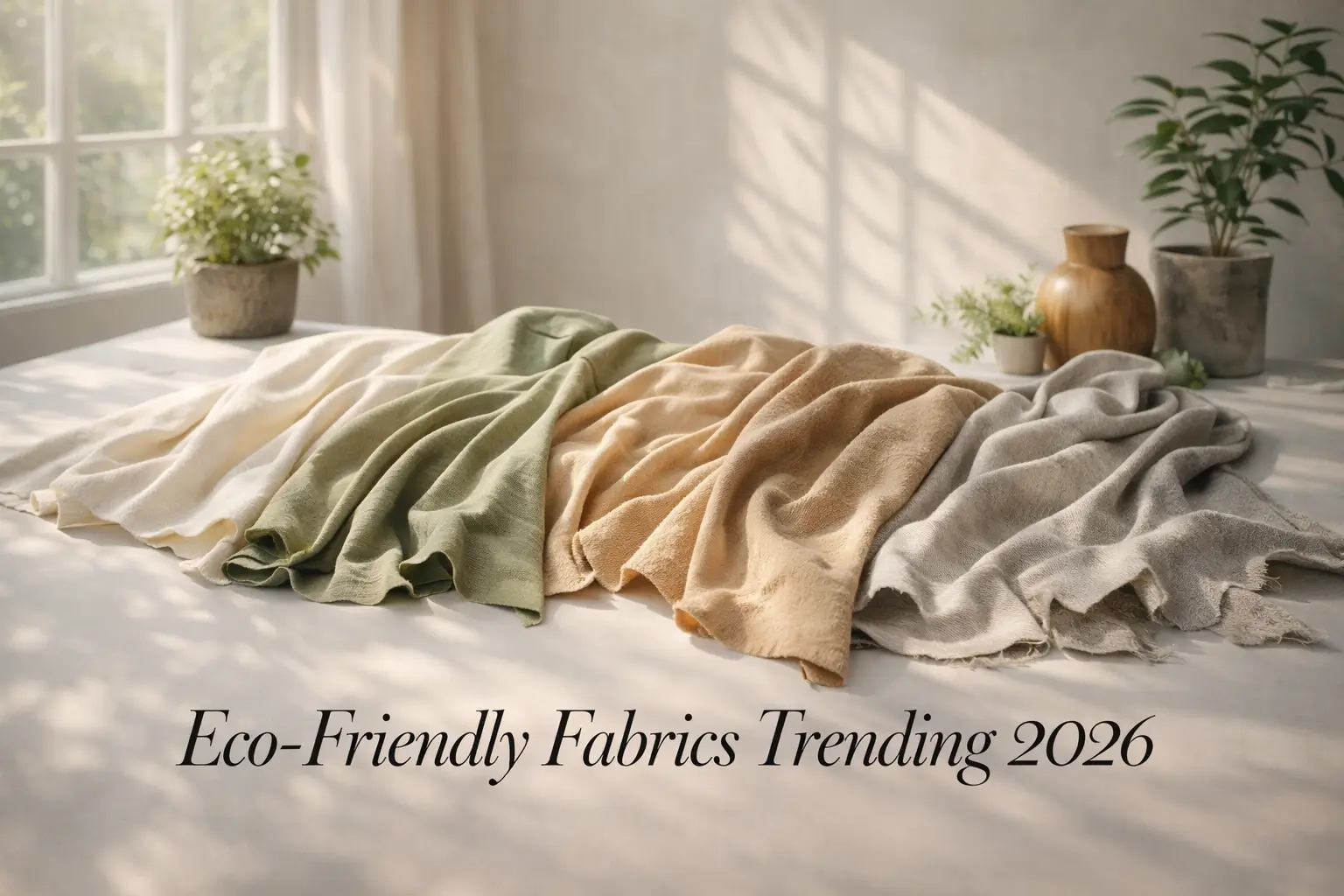
Eco-Friendly Fabrics That Will Trend in 2026
Eco-friendly fabrics are no longer a niche thing. I remember — honestly, it wasn’t that long ago — walking into a boutique in Brooklyn and seeing a rack of “sustainable” shirts that looked like they’d been sewn from potato sacks. Scratchy, shapeless, kinda depressing. You bought one because you felt guilty about fast fashion, wore it twice, and shoved it to the back of your closet. Sound familiar?
Well, things have changed. And I mean drastically. 2026 is shaping up to be the year where sustainable fashion finally stops being a compromise. The fabrics coming through? They’re gorgeous, they’re functional, and yeah — they’re actually comfortable. So let’s talk about what’s trending, why it matters, and which materials you should genuinely be paying attention to.
Fair warning: this isn’t gonna be your standard listicle. We’re going deep on this one.

Eco-Friendly Fabrics: Why 2026 Is the Turning Point
Eco-friendly fabrics have been a conversation in fashion circles for, what, a decade now? But 2026 feels different. Consequently, it’s not just the brands pushing sustainability anymore — it’s the consumers pulling. There’s a generational shift happening. Gen Z, millennials who’ve had kids, even some boomers who’ve watched enough climate documentaries — they’re all asking questions before they buy. Where was this made? What’s in it? Who made it?
Additionally, the supply chain pressures of the past few years forced a lot of brands to rethink their sourcing. And weirdly? That ended up being good for the sustainable fabric industry. When you can’t just churn out cheap synthetic stuff from overseas as easily, you start looking at alternatives. Furthermore, innovations in textile science have finally caught up with the demand. We’re talking bio-based materials, regenerative agriculture-sourced fibers, and closed-loop production systems that would’ve seemed like sci-fi just five years back.
Here’s a little-known fact I stumbled across while researching: the global sustainable textile market was valued at around $6.3 billion in 2023 — and it’s projected to hit somewhere north of $15 billion by 2030. That’s not a trend. That’s a structural shift in how the whole industry operates.
Eco-Friendly Fabrics Made From Hemp: The Comeback Kid
Eco-friendly fabrics made from hemp have been around forever — literally thousands of years — but hemp had a rough few decades thanks to some unfortunate legal associations. However, it’s staging quite the comeback. And this time, it actually deserves the hype.
Hemp grows without pesticides. It drinks barely any water compared to cotton — we’re talking about 50% less water usage, roughly. It improves soil health as it grows, which is wild when you think about it. Most crops deplete the soil; hemp actually gives back. Moreover, hemp fabric gets softer with every wash. So that scratchy thing I mentioned earlier? That’s not a hemp problem — that was just bad textile processing.
I spoke to a friend who runs a small clothing label out of Portland — she switched her t-shirt line to hemp-cotton blend last year. Her words: “Customers kept coming back asking if we changed something, because the shirts felt better after washing. That’s when I knew we’d cracked it.” That kind of feedback, you can’t fake.
Therefore, expect to see a lot more hemp showing up in 2026 — especially in casualwear, denim alternatives, and even activewear. The processing technology has improved massively, so the fabric is smoother, more versatile, and frankly more attractive than ever before.
Eco-Friendly Fabrics: Tencel and Lyocell Take Center Stage
Eco-friendly fabrics from the Tencel family — technically lyocell — are having a serious moment. And honestly? They deserve it. Tencel is made from wood pulp, usually sustainably sourced eucalyptus, in a closed-loop process that recaptures something like 99% of the solvents used. That’s genuinely impressive. It’s not just greenwashing with a nice badge — the chemistry actually backs it up.
The feel of Tencel is silky. Like, surprisingly silky. It drapes beautifully. It breathes well. It wicks moisture. It’s antimicrobial, which matters more than people realize — especially for workout gear and travel clothing. Additionally, it biodegrades at end of life, which is more than you can say for your average polyester blend that’ll be hanging around in a landfill until approximately the end of time.
Fashion weeks in both Milan and New York showed heavy Tencel representation in Spring 2026 preview collections. Consequently, what trickles down from runway to retail usually follows within 6-12 months. So if you haven’t seen Tencel-forward pieces hitting the mainstream shelves yet, give it until mid-year. It’s coming.
Eco-Friendly Fabrics from Recycled Materials: Not Just Water Bottles Anymore
Eco-friendly fabrics made from recycled content have gotten way more sophisticated. Remember when “recycled plastic bottle” fabric was kind of the whole story? That was… fine, I guess, as a concept. But in practice, those early recycled polyesters shed microplastics like crazy in the wash, which created a whole new environmental problem. Kinda defeats the purpose.
Here’s where it gets more interesting for 2026, though. The recycled fabric conversation has evolved significantly. Recycled ocean plastic textiles now partner with coastal cleanup initiatives, and the fiber quality has improved enough for use in premium outdoor gear, not just cheap tote bags. Furthermore, companies have developed tighter weave technologies that substantially reduce microplastic shedding.
Textile-to-textile recycling is the real game changer. Instead of downcycling fabric into insulation or industrial rags, new chemical recycling processes can break down old clothing back into raw fibers that are, in many cases, indistinguishable from virgin materials. A few startups out of Scandinavia and Japan are leading this charge. Additionally, the EU’s Extended Producer Responsibility regulations are forcing big fashion brands to invest in this infrastructure or pay penalties. Follow the money — this is where a lot of R&D budget is flowing right now.
I’ll be honest — the “recycled” label still requires some scrutiny. Not all recycled fabric is created equal. However, the better brands are now publishing detailed lifecycle assessments. That transparency? That’s new. And it’s a good sign.
Eco-Friendly Fabrics: Organic Cotton’s Glow-Up
Eco-friendly fabrics from organic cotton aren’t new — but the way they’re being used in 2026 is. Traditional organic cotton had a bit of an image problem. It was often positioned as the “safe” choice for babies and people with sensitive skin, which, fine, but it didn’t exactly scream fashionable. Moreover, yield issues and price premiums made it hard for a lot of brands to scale.
What’s shifted is the growing movement toward regenerative organic agriculture. This goes beyond just “no pesticides.” Regenerative organic farming focuses on soil health, carbon sequestration, biodiversity, and even the welfare of farm workers. There’s a Regenerative Organic Certified (ROC) standard that’s gaining traction — and some brands are using it as a real differentiator rather than just a checkbox.
Additionally, the aesthetics have caught up. Organic cotton in 2026 isn’t just for plain white tees and yoga pants. Designers are using it for structured tailoring, intricate prints, and premium denim. The tactile quality has genuinely improved as well — better ginning and spinning processes mean a softer, more consistent fiber. So if your previous experience with organic cotton was a boxy, slightly stiff shirt from a farmers market, give it another shot.
Eco-Friendly Fabrics You Haven’t Heard of Yet: The Wildcards
Eco-friendly fabrics don’t stop at the obvious picks. There are some genuinely fascinating materials on the edge of mainstream adoption that are worth knowing about. Some of these might sound weird. That’s kind of the point.
Mycelium Leather — Yes, Mushroom Leather is Real
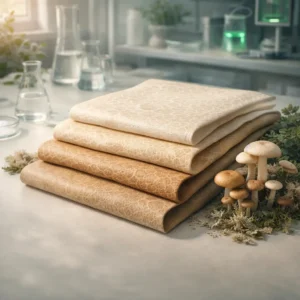
This one blew my mind the first time I came across it. Mycelium — the root structure of mushrooms — can be grown into a remarkably leather-like material. Companies like Bolt Threads and Ecovative have been developing this for years, and consequently, 2026 is starting to see real commercial rollouts. Stella McCartney used it in a collection. Hermès collaborated on a mycelium-based material. When luxury houses start playing with it, you know it’s not just a gimmick.
The production process grows in days, not years. No animal farming. No toxic tanning chemicals. And the result? A material that looks and feels like high-quality leather. The durability is still being improved, but for accessories, bags, and certain apparel applications, it’s already viable.
Banana Fiber — The Tropical Secret
Here’s a niche insight: banana plants produce commercial fruit only once, and then the entire stalk — which can be massive — is usually just agricultural waste. But the pseudostem of a banana plant contains incredible fiber. In parts of India, the Philippines, and Japan (where it’s called Kijoka banana cloth, an ancient tradition), banana fiber has been used in textiles for centuries.
For 2026, several sustainable textile startups are turning this agricultural byproduct into fashion-grade fabric. The material has a natural sheen, is incredibly strong, and furthermore uses waste that would otherwise be burned or left to rot. Additionally, it grows back season after season without replanting. It’s genuinely cool stuff — and it’s showing up in luxury home goods and high-end accessories right now.
Seaweed Fiber — From the Ocean, Back to the Ocean
Seaweed grows incredibly fast, absorbs CO2, doesn’t need fertilizer, and doesn’t need freshwater. Fiber made from seaweed — combined with other natural fibers — has unique properties: it retains skin moisture, has natural UV protection, and is completely biodegradable. Moreover, harvesting seaweed actually benefits marine ecosystems when done correctly. Consequently, brands in the activewear and skincare-adjacent apparel space are paying serious attention to this one.
Eco-Friendly Fabrics and the Fast Fashion Problem: Let’s Not Sugarcoat It
Eco-friendly fabrics are a genuinely powerful tool — but they’re not a magic fix. I’d feel dishonest not mentioning this. The fashion industry as a whole still produces an enormous amount of waste, pollution, and carbon emissions. Switching to sustainable fabrics while still producing 52 “micro-seasons” per year, as some fast fashion brands do, is a bit like switching to paper straws while running a fossil fuel plant. The math doesn’t add up.
Nevertheless, materials matter. They matter a lot. The shift toward better fabrics is a necessary piece of the puzzle, even if it isn’t the whole picture. Therefore, as a consumer, you’ve got some real leverage here. Choosing pieces made from genuinely sustainable fabrics, buying less but better, and supporting brands that publish transparent supply chain data — all of that adds up.
Also, here’s a thing I think about: vintage and secondhand is, by definition, the most eco-friendly fabric of all. Because it already exists. In 2026, the resale market is projected to hit $77 billion globally. That’s not nothing. Furthermore, the stigma around secondhand clothing has basically evaporated — if anything, it’s become a marker of savvy style over conspicuous consumption. Just saying.
Eco-Friendly Fabrics in Colour: The Natural Dye Renaissance
Eco-friendly fabrics are only part of the equation. The dyes used matter enormously — conventional textile dyeing is one of the biggest water polluters on the planet. It’s estimated to be responsible for about 20% of industrial water pollution globally. That’s a staggering number when you stop and think about it.
Therefore, 2026 is seeing a meaningful rise in natural dye techniques alongside sustainable fabric choices. Plant-based dyes from indigo, madder, weld, and even food waste (avocado pits make a gorgeous blush pink, which I learned at a workshop in Oaxaca and have never forgotten) are being scaled up by innovative brands. Furthermore, waterless dyeing technologies — using CO2 or air instead of water as the dye medium — are moving from lab to factory floor.
The colour palette that results from natural dyes is earthy, nuanced, and honestly beautiful. It’s not as saturated or predictable as synthetic dyes, but that slight variation is part of the appeal. Each piece ends up being subtly unique. Additionally, the colours tend to age gracefully rather than fading into something washed-out and sad. Your great-grandmother’s naturally dyed tablecloth probably still looks better than your neon fast-fashion hoodie from three years ago.
Eco-Friendly Fabrics and Technology: The Unexpected Alliance
Eco-friendly fabrics and cutting-edge technology might seem like an odd pairing — one feels rooted in nature and tradition, the other in labs and algorithms. But they’re increasingly inseparable. Consequently, some of the most exciting developments in sustainable textiles are happening at the intersection of biotechnology and fashion.
Consider fermentation-based textiles. Companies are using microorganisms to produce silk-like proteins — essentially lab-grown silk without any silkworms involved. The resulting material has silk’s desirable properties (lustrous, strong, smooth) without the ethical complications or the resource intensity. Moreover, because the production is biological rather than mechanical, it can be scaled with a much lighter environmental footprint.
AI is also playing a role. Fabric design algorithms are now being used to optimize yarn structure for minimal material use and maximum performance. Additionally, supply chain AI is helping brands reduce overproduction — one of the biggest waste drivers in fashion — by improving demand forecasting. It’s not glamorous, but it matters. Furthermore, some brands are using blockchain to create fully traceable supply chains, so when they say their linen was grown in Belgium and processed in Portugal, you can actually verify that.
Eco-Friendly Fabrics Trends: What to Actually Buy in 2026
Eco-friendly fabrics are increasingly accessible. You don’t need to spend a fortune or become a full-time sustainability researcher to make better choices. Here’s what I’d personally look for, based on everything I’ve seen and read and — yeah — touched:
Look for GOTS certification on anything labeled organic cotton. The Global Organic Textile Standard covers both the fiber and the manufacturing process, so you know it’s not just greenwashing at the farm level while the rest of the supply chain is a mess.
Additionally, look for Bluesign or OEKO-TEX certifications for synthetic and semi-synthetic fabrics. These standards ensure the manufacturing process doesn’t use harmful chemicals and that worker safety is maintained.
Be skeptical of vague claims. “Eco-friendly,” “green,” “sustainable” — these aren’t regulated terms. Consequently, any brand can slap them on a label. Furthermore, what you want is specificity: the actual fabric composition, the certifications, where it was manufactured, and ideally some data on the environmental impact.
Don’t overlook durability. The most eco-friendly piece of clothing is the one you keep wearing for five years. A cheap “sustainable” item that falls apart after ten washes is objectively worse than a durable conventional garment you’ll wear hundreds of times.
So, What’s the Takeaway?
Look, eco-friendly fabrics in 2026 are not some fringe interest for people who compost obsessively and own too many linen tote bags. They’re becoming mainstream. They’re becoming the norm. And importantly, they’re becoming good — like, genuinely aesthetically and functionally good — in ways they weren’t a few years ago.
Hemp, Tencel, recycled-content fabrics, regenerative organic cotton, mushroom leather, banana fiber, seaweed-based textiles — these aren’t gimmicks. They’re the future of what we wear, and that future is arriving faster than most people realize. Furthermore, as the production of these materials scales up, the price premiums are dropping. Making sustainable choices is getting easier and cheaper year by year.
My honest take? Start with one thing. Maybe swap out your next basic t-shirt purchase for a hemp or organic cotton option. Notice how it feels. Notice how it holds up. Pay attention to the label. Ask the brand a question — their response (or lack of it) will tell you everything. Additionally, thrift when you can. Repair what you have.
The fashion industry is at a genuinely interesting crossroads right now. And the choices we make as consumers — collectively — are steering it. Eco-friendly fabrics are one of the clearest, most tangible ways to vote with your wallet. Therefore, you might as well be informed about what you’re choosing.
Now go check the label on whatever you’re wearing right now. I’ll wait.