AI Virtual Clothing in 2026: The Rise of Digital Fashion
AI Virtual Clothing in 2026 is not just some sci-fi concept anymore. I remember thinking, back in 2021, that wearing a digital outfit was the geekiest thing imaginable. Like… who does that? But here I am, five years later, actually excited about a hoodie that doesn’t physically exist. Funny how life works, right?
The fashion industry — which, let’s be honest, has always been a little extra — has gone and merged itself with artificial intelligence so completely that it’s getting genuinely hard to tell where tech ends and style begins. And honestly? I’m not mad about it. Not even a little.
So let’s dig into what’s actually happening out there, because this stuff is wild, it’s moving fast, and if you haven’t been paying attention, you might’ve already missed three product launches this week alone.
AI Virtual Clothing: What Even Is It?
AI Virtual Clothing, at its core, is digitally designed apparel that exists only in the virtual world — but can be “worn” by you in photos, videos, AR filters, or metaverse environments. Think of it like Photoshop, but way more sophisticated, and actually kinda fun.
Companies like DressX, The Fabricant, and a whole wave of newer startups have been building out these virtual wardrobes since at least 2020. But in 2026, the tech has hit a totally different gear. We’re talking generative AI designing entire collections overnight. We’re talking neural networks that can drape a piece of fabric onto a human body in a photo with genuinely scary accuracy.
I tried one of these platforms last month — won’t say which one because I don’t wanna sound like an ad — and honestly, the result was… impressive. Was it perfect? Nah. But was it good enough that my friends asked where I bought the jacket? Absolutely yes.
Furthermore, the accessibility has exploded. It’s not just luxury brands or tech companies playing in this space anymore. Independent designers, teenagers on TikTok, people in countries where fast fashion absolutely dominates — they’re all getting in on it. That’s kind of a big deal.
AI Virtual Clothing Trends Dominating 2026
AI Virtual Clothing trends this year are moving in a few really interesting directions simultaneously — and they’re pulling fashion culture along with them whether the industry likes it or not.
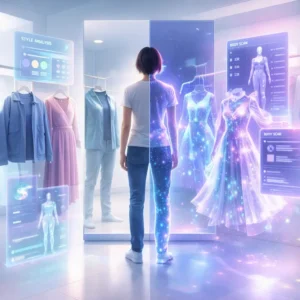
First, there’s the AR try-on revolution. Basically every major retailer with half a brain has integrated augmented reality try-ons into their app. You hold up your phone, and boom — you’re “wearing” the outfit. Zara, H&M, even some of the smaller boutique brands on Instagram. The tech isn’t new, sure, but the quality leap in 2025-2026 has been kinda staggering.
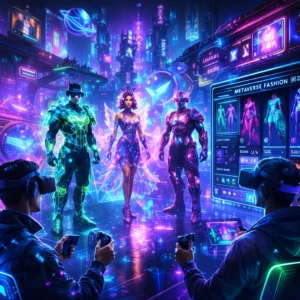
Then there’s the metaverse wardrobe economy. People are spending real money — sometimes embarrassing amounts of real money — on outfits for their digital avatars. In platforms like Roblox, Fortnite, Decentraland, and a bunch of newer virtual spaces, your avatar’s fit is a status symbol. It’s the new Air Jordan drop, except the shoes don’t physically exist.
Additionally, we’re seeing generative AI fashion design go mainstream. Designers are using tools like Midjourney, Adobe Firefly, and a growing list of fashion-specific AI tools to prototype collections in days rather than months. Consequently, we’re seeing smaller brands release stuff faster, iterate more, and take more creative risks. Which, for consumers, is genuinely exciting.
One more thing worth mentioning — and I haven’t seen enough people talking about this — is the rise of AI-generated fashion influencers. Virtual models with millions of followers, wearing virtual clothes, promoting brands. The lines between real and digital are blurring so fast it makes my head spin a little.
The Sustainability Angle Nobody’s Talking About Enough
AI Virtual Clothing is, weirdly, one of the more genuinely sustainable developments in an industry that has historically been… not great on that front. The fashion industry accounts for around 10% of global carbon emissions. That’s not a typo. It’s a depressing, planet-sized bummer of a statistic.
Virtual clothing, in contrast, produces zero textile waste, uses no water, requires no sweatshop labor, and has basically no shipping footprint. Obviously, there are digital carbon costs — running AI servers isn’t free environmentally — but the comparison is still pretty favorable.
Moreover, virtual try-ons are genuinely helping reduce returns. A huge chunk of the environmental cost in fashion comes from the logistics of returns — shipping things back and forth, re-processing inventory. When someone can virtually try something on and feel more confident about their purchase, they return it less. Brands are reporting double-digit drops in return rates after implementing AR try-on tech. That’s real.
I’ll be honest — I was skeptical about whether any of this was meaningful or just greenwashing with extra steps. But the data is starting to back it up. Not entirely, not perfectly, but enough to take seriously.
AI Virtual Clothing and the Creator Economy Collision
AI Virtual Clothing isn’t just changing shopping — it’s completely reshaping how creators work. And this is where things get genuinely exciting for anyone who makes stuff for a living.
Imagine you’re a fashion designer based in Lagos, or Manila, or literally anywhere without access to major fashion week stages, expensive fabrics, manufacturing relationships, or the kind of funding that runway shows require. Traditionally, the barriers to entry were enormous. Now? You design something with AI tools, release it digitally, and potentially sell thousands of copies of a virtual garment with zero physical production cost.
That’s not hypothetical. That’s happening. Designers from places that have historically been on the receiving end of global fashion trends — not the creating end — are now building audiences and income through digital fashion. It’s genuinely one of those rare democratizing moments in an industry that usually gatekeeps like crazy.
Furthermore, the NFT fashion space — which had a messy, chaotic, often scammy first chapter — has matured significantly. The wild speculation has cooled down, and what’s left is a more functional marketplace where digital garments can be owned, resold, and even licensed. There’s still hype, but underneath it, there’s actual utility now.
Consequently, established fashion houses are scrambling to figure out how to compete with, or collaborate with, independent digital designers who have a fraction of their overhead and ten times their social media savvy. It’s fun to watch, honestly.
AI Virtual Clothing in Gaming and the Metaverse: Bigger Than You Think
AI Virtual Clothing has found maybe its most enthusiastic audience in gaming and virtual worlds — and the scale of this market will genuinely surprise you if you haven’t been following it.
In 2025, in-game cosmetic purchases — which is basically just virtual clothing and accessories — generated over $60 billion globally. Let that sink in. Sixty. Billion. Dollars. For stuff that doesn’t physically exist. And the people spending that money are, by and large, completely unbothered by that fact. Value is where people perceive it. That’s always been true. Digital fashion just makes it more obvious.
Games like Fortnite have collaborated with Balenciaga, Nike, and Gucci. These aren’t throwaway partnerships — they’re full collections, with thought put into them, generating massive revenue for both sides. Meanwhile, platforms like Roblox have entire economies built around virtual fashion, with teenage designers making serious income selling digital items they’ve created.
The metaverse angle is still evolving — let’s not pretend the metaverse didn’t have a rough few years in the public imagination — but the underlying behavior of people wanting to customize their digital selves is extremely persistent. AI virtual clothing is going to be the engine of that economy as these platforms mature.
Additionally, cross-platform wearability is becoming a thing. Imagine buying a digital sneaker and being able to wear it across multiple games, apps, and virtual environments. The tech for this is being built right now. When it arrives, the virtual fashion market is going to look completely different.
The Brands Already Winning at AI Virtual Fashion
AI Virtual Clothing adoption isn’t uniform across the industry — some brands are genuinely killing it, and others are still figuring out which end of the smartphone to look through.
Nike has been aggressive and smart about digital fashion. Their RTFKT acquisition back in 2021 was prescient — RTFKT made digital sneakers and had a rabid community, and Nike essentially bought a front-row seat to the future. Their subsequent digital releases have performed well, and they clearly have a long-term strategy here.
Gucci is another one worth watching. They’ve released virtual items across multiple gaming platforms, launched digital-only collections, and generally leaned into the experimental nature of this space. For a brand that’s over 100 years old, that’s a pretty wild move. But it’s working.
Then there are the born-digital brands — companies that never had a physical product and don’t plan on it. The Fabricant is probably the most famous. They’ve done collaborations with traditional fashion houses and proved that a virtual-only fashion brand can be taken seriously.
Meanwhile, fast fashion brands are in an interesting spot. On one hand, virtual fashion kinda disrupts their model. On the other hand, AI design tools let them prototype and release even faster than before. Whether they figure out how to navigate that tension — well, that’s a drama worth following.
AI Virtual Clothing and Identity: The Deeper Stuff
AI Virtual Clothing is, at its most interesting, a conversation about identity. And I think this is where the real cultural significance lives, even if it doesn’t get talked about enough in the breathless tech coverage.
Clothes have always been how people communicate who they are without saying a word. Your outfit is a sentence. Sometimes a short one, sometimes a whole paragraph. The ability to extend that self-expression into digital spaces — to be whoever you want to be in a virtual environment, free from the physical constraints of your body, your budget, or your geography — is actually kind of profound.
For a lot of people — especially younger people, and especially LGBTQ+ communities who’ve historically used fashion as a form of self-assertion — digital fashion spaces offer a freedom that the physical world doesn’t always provide. You can experiment with different expressions of yourself without the social cost that sometimes comes with doing it in real life.
I’ve seen this play out in real conversations with people. A friend of mine who’s been slowly figuring out their gender identity told me that being able to experiment with how they presented themselves in gaming spaces was genuinely helpful. That’s not something I expected from a conversation about video game cosmetics, but here we are.
Additionally, AI is making personalization possible at a scale that wasn’t conceivable before. Virtual clothing can be generated to fit your exact body scan, your stated preferences, your cultural references. That’s a very different experience from walking into a store and hoping something fits and speaks to you.
The Challenges and Weird Stuff Nobody Warns You About
AI Virtual Clothing is genuinely exciting, but let’s not pretend it’s all smooth sailing. There’s some genuinely weird stuff happening, and some real challenges that the industry hasn’t fully reckoned with.
First, intellectual property is a mess. When an AI generates a fashion design, who owns it? The person who wrote the prompt? The company that built the AI? The artists whose work the AI trained on? Courts are still figuring this out, and the fashion industry — which has historically had pretty weak IP protections compared to, say, music or film — is in a particularly complicated spot.
Second, deepfake fashion is a thing now. AI can put someone in a virtual outfit they never agreed to wear. Used playfully, that’s mostly fine. Used manipulatively — to fake endorsements, to create misleading content — it’s a genuine problem. We’ve already seen lawsuits.
Third, there’s a real risk of this technology widening inequality rather than closing it. The best AI fashion tools require good hardware, reliable internet, and often paid subscriptions. In the markets where digital fashion could be most democratizing — emerging economies, rural areas — access isn’t always there.
Furthermore, there’s the question of data. Virtual try-ons and personalized AI fashion require body data. That’s intimate information. How it’s stored, who can access it, what it’s used for — these aren’t answered questions, and the track record of tech companies with personal data isn’t exactly inspiring.
What’s Coming Next: AI Virtual Clothing in the Next Five Years
AI Virtual Clothing is accelerating, and the next five years are going to be genuinely hard to predict — which is a fun problem to have if you’re interested in this space.
Haptic feedback clothing is being developed that would let you physically feel virtual garments. Smart fabrics that change their digital display based on your environment or mood. AI stylists that learn your preferences over time and proactively suggest outfits — virtual or physical — before you even think to ask.
Additionally, the integration between virtual and physical is getting tighter. Digital-physical hybrids — where a garment has both a physical form and a digital twin — are already being sold. As manufacturing technology improves, the gap between what’s possible digitally and what’s possible physically is going to keep shrinking.
Moreover, the regulatory landscape is going to shift. Governments are starting to pay attention to digital fashion — particularly around environmental claims, IP, and data privacy. Whatever comes out of that will shape how this market develops.
And honestly, the most exciting stuff is probably the stuff we can’t fully anticipate yet. Five years ago, nobody predicted that a 14-year-old in Roblox would be making a six-figure income selling digital hats. The surprises are usually more interesting than the predictions.
AI Virtual Clothing: Why It Actually Matters
AI Virtual Clothing isn’t just a tech trend or a fashion gimmick — it’s genuinely reshaping several industries at once, touching on questions of sustainability, identity, economics, and creativity simultaneously.
The fashion industry is one of the most polluting, exploitative, and wasteful industries on the planet. The gaming and virtual world economy is one of the fastest-growing creative economies in the world. AI is one of the most transformative technologies in human history. When all three of those things collide — which is exactly what’s happening right now — you get something genuinely worth paying attention to.
I’m not gonna pretend this is all figured out, or that everything will be fine, or that there aren’t real risks and real downsides to navigate. There are. But I’m also not gonna be the person who dismisses this as frivolous because it involves virtual clothes.
The way people dress — physically or digitally — matters. It always has. The tools for doing it are just getting weirder, smarter, and more interesting. And in 2026, honestly? I’m here for it.