Future of Fashion: What 2026 Is Actually Doing to the Industry
Okay, real talk — I didn’t expect 2026 to hit fashion this hard.
I remember sitting in a thrift store in Karachi last winter, flipping through a rack of secondhand denim, and this older uncle next to me goes, “Beta, fashion is just a circle. Everything comes back.” And honestly? He wasn’t wrong. But also… he was only half right. Because what’s happening in 2026 isn’t just a comeback tour. It’s a full genre change.
The future of fashion isn’t some distant sci-fi concept anymore. It’s here. It’s now. And frankly, it’s a little chaotic — which is exactly why it’s exciting.
Future of Fashion Starts With the Death of “One Size Fits the Algorithm”
Let’s start with something that’s been quietly driving everyone insane: algorithm-driven fashion.
For years, fast fashion brands essentially reverse-engineered TikTok trends and shoved them into production cycles faster than you can say “micro-trend.” The result? Everybody ended up wearing the same beige linen set. Same “clean girl” aesthetic. Same boring sameness — everywhere.
But consequently, 2026 is pushing back hard.
What I’m seeing — and what people in the industry are actually talking about — is a massive shift toward hyper-individualism. People are done dressing for the algorithm. They’re dressing for themselves again. And therefore, brands that refuse to adapt to this are getting left behind, fast.
Raf Simons talked about this (loosely) back in 2023, and it feels prophetic now. Fashion was suffocating under the weight of viral-ness. Now, thankfully, people are breathing again.

Future of Fashion and the Rise of Wearable Tech — But Make It Actually Wearable
Here’s where it gets nerdy, and I mean that in the best way possible.
Wearable technology has been “the future” for about a decade now. Remember Google Glass? Yeah. We don’t talk about that anymore.
But something shifted. The future of fashion in 2026 actually figured out how to make tech not look terrible. That’s the breakthrough nobody’s celebrating enough.
I tried on a jacket at a pop-up in Dubai last year — temperature-regulating lining, embedded biometric sensors, and it looked like something straight outta a Bottega Veneta lookbook. No chunky gadget energy. No weird wires. Just… a jacket. A really good jacket that happened to track my heart rate.
Furthermore, brands like Pangaia, Ministry of Supply, and a handful of Korean startups I’ve been following are leading this charge. They’re not making tech fashion — they’re making fashion that happens to be smart. Big difference. Huge, actually.
The consumer isn’t buying a gadget. They’re buying an identity. And the identity has to look good first, function second. That’s just human nature.
Future of Fashion Is Sustainable — But Not in the Way They Keep Telling You
Okay, I’m gonna be a little controversial here.
“Sustainable fashion” as a marketing term? I’m over it. Completely. Because for every brand genuinely doing the work, there are fourteen others slapping a recycled hangtag on a polyester top and calling themselves eco-warriors. That’s greenwashing, and honestly it’s kinda exhausting to watch.
However, the real sustainability movement in 2026 looks different. It’s quieter. It’s happening in places like Bangladesh, where factories are actually transitioning to solar. In Ethiopia, where Yekatit apparel brands are building circular supply chains from scratch. In local markets all over South Asia where upcycled luxury is becoming a status symbol — not a compromise.
My cousin runs a small tailoring business in Lahore. She’s been doing “sustainable fashion” for fifteen years — she just called it “not wasting fabric.” Now suddenly the whole world has caught up to what grandmothers have been doing forever. Isn’t that something.
Additionally, rental fashion is finally — finally — going mainstream. Nuuly, By Rotation, and a growing list of regional platforms are making it normal to rent a dress for a wedding and send it back. The stigma is gone. Moreover, Gen Z is actively preferring it. They don’t want to own everything. They want to experience everything.
That’s a fundamental shift in consumer psychology, and subsequently the industry is scrambling to catch up.
Future of Fashion: The Aesthetic Landscape of 2026
Let’s talk looks, because that’s fun.
Here’s what’s actually popping right now, from what I’ve seen and read and — let’s be honest — spent way too much time obsessing over:
- Post-Quiet Luxury = Loud Restraint
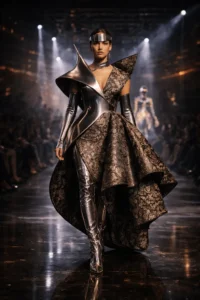
This one’s hard to explain without sounding contradictory. It’s not maximalism. It’s not minimalism. It’s like… expensive drama? Think sculptural silhouettes, bold monochromatic palettes, but nothing flashy. No logos. No rhinestones. Just shape and fabric doing all the work.
It’s the fashion equivalent of someone walking into a room, saying nothing, and somehow commanding all the attention. We love that for us.
- Cultural Fusion — Done With Respect This Time
The future of fashion in 2026 is genuinely multicultural. Not the appropriation kind from the 2010s that gave us bindis at Coachella. I mean real, intentional collaboration between designers across cultures.
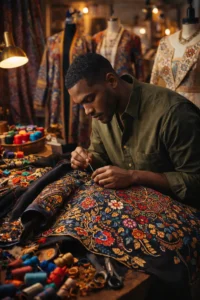
Tokunbo Ajidagba’s work blending Yoruba textile traditions with contemporary silhouettes? Incredible. The Pakistani designers showing at London Fashion Week, finally getting mainstream credit for craft that’s been world-class for centuries? Long overdue.
The industry is listening to different voices. Not perfectly — not even close. But the direction is right, and that matters.
Technical outdoor wear crossed with elevated fashion. I know, I know — we’ve been talking about gorpcore since like 2019. But it’s evolved. It’s not just hiking boots with a blazer anymore.
In 2026, it’s about performance fabrics in luxury cuts. It’s brands like Arc’teryx doing runway collaborations. It’s Salehe Bembury making sneakers that people wait three days in line for. The outdoors aesthetic has grown up, put on a fitted jacket, and is somehow still wearing trail runners. And it works.
Future of Fashion in the Global South: The Story Nobody’s Writing Enough
This is the part I feel genuinely passionate about — probably because it’s the world I grew up in.
The future of fashion isn’t just happening in Paris, Milan, or New York. It’s happening in Lagos, in Karachi, in Jakarta, in São Paulo. And these markets are not waiting for permission anymore.
Nigerian fashion has exploded globally, and consequently designers like Kenneth Ize and Tokyo James are getting the international recognition they deserved years ago. Meanwhile, Southeast Asian fashion weeks — Jakarta, Bangkok, Manila — are drawing legitimate international press and buyers.
Furthermore, the rise of social commerce (selling directly through Instagram and TikTok shops) has democratized the fashion business in ways traditional retail never could. A designer in Multan can now reach buyers in Manchester. That’s extraordinary when you actually stop to think about it.
I talked to a friend who runs a modest fashion brand from Islamabad. She’s shipping to 23 countries. No investor funding. No PR agency. Just good product, good content, and a phone. Five years ago that would’ve been a fantasy. Today, it’s Tuesday.
Future of Fashion: AI’s Role (And Why It’s Not What You Think)
Alright, we gotta talk about AI in fashion. Because it’s a thing, it’s growing, and the takes are all over the place.
AI is not replacing designers. Let’s just get that out of the way first.
What AI is doing — and doing genuinely well — is the boring stuff. Demand forecasting. Reducing overproduction. Personalizing the shopping experience. Generating pattern variations in design software. That stuff is legitimately useful and, consequently, making the industry more efficient.
But here’s the niche thing that not enough people are talking about: AI is being used to preserve fashion heritage. There are projects using machine learning to reconstruct ancient textile patterns — Indus Valley, Aztec, Byzantine — that would otherwise be lost or inaccessible. That’s pretty remarkable, right?
The future of fashion isn’t AI vs. human creativity. It’s AI handling the logistics so human creativity can actually breathe. That’s the version of this I’m rooting for.
The Resale Market: How Pre-Loved Became Premium
Quick question — when’s the last time you felt guilty about buying secondhand?
If you’re under 35, probably never. And that’s a genuine cultural shift worth acknowledging.
The resale market is projected to hit $350 billion globally by 2028 (according to ThredUp’s annual resale report). Platforms like Depop, Vestiaire Collective, StockX, and regional alternatives are not niche anymore. They’re mainstream retail channels.
Moreover, luxury resale has completely shaken the traditional model. Why buy a new Chanel bag at retail when you can get a vintage piece with more character and (sometimes) better value retention? Savvy consumers figured this out, and therefore brands are having to respond — some with their own resale programs (Gucci Vault, Levi’s SecondHand), others by embracing scarcity models that make their pieces feel worth holding onto.
Additionally, there’s a social cachet to being a great thrifter now. Finding a rare vintage Comme des Garçons piece at a charity shop? That’s a flex. A massive one. The story matters as much as the item.
Future of Fashion and the Changing Retail Experience
Remember when going to a mall was an event?
I grew up going to Dolmen Mall in Karachi like it was a religious pilgrimage. The whole family, every Friday, just vibing. That energy is mostly gone now — but it’s not because retail died. It just evolved.
Physical retail in 2026 is about experience, not inventory. The brands winning in brick-and-mortar aren’t the ones with the most products. They’re the ones creating spaces people actually want to be in.
Glossier built community. Jacquemus turned a pop-up in a Parisian supermarket into a viral cultural moment. Alo Yoga turned their stores into wellness spaces. The product is almost secondary — the feeling is the thing.
Furthermore, hybrid retail (where you discover online, experience in-store, and buy wherever) is now just… how shopping works. The brands that still see online and offline as separate channels are fundamentally misunderstanding the modern consumer.
Future of Fashion: What the Next Generation Actually Wants
Gen Z and Gen Alpha (yes, Gen Alpha is starting to have opinions and money — terrifying and wonderful) have values that genuinely differ from previous generations.
They want transparency. Not “we care about sustainability” copy on a website. They want receipts. They want to know who made the garment, where the cotton came from, how the dye was processed. Brands that can show that story — not just tell it — are winning.
They want community. Fashion has always been tribal, but now the tribes are hyper-specific. Cottagecore people, dark academia people, Y2K people, quiet luxury people — these aren’t just aesthetics, they’re identities with rituals and in-jokes and their own economies.
They also, consequently, have shorter patience for inauthenticity. They can smell a brand trying too hard from a mile away. The brands that are winning with young consumers are the ones that seem genuinely unbothered — because they actually have a point of view.
So What Does the Future of Fashion Actually Look Like?
Honestly? Beautiful and messy. Which sounds about right.
The future of fashion in 2026 is not a single trend or a single aesthetic. It’s a plurality. It’s a Nigerian designer collaborating with a Korean textile house. It’s a girl in Lahore selling handmade khaddar jackets to buyers in Amsterdam. It’s a jacket that regulates your temperature and also looks fire. It’s your grandmother’s embroidery technique being cited as a reference in a runway show at Paris Fashion Week.
Additionally, it’s a rejection of the idea that fashion has one center anymore. The industry is decentralizing — geographically, culturally, economically. And therefore, anyone with genuine craft, a compelling story, and the savvy to share it can find their audience now.
Is everything perfect? Absolutely not. Fast fashion is still a massive problem. Worker exploitation in supply chains is still happening. Greenwashing is still rampant. The industry has enormous work to do.
But the direction of travel — the genuine, underlying momentum — is towards something more human, more diverse, and more interesting than what we had ten years ago.
And if fashion reflects culture (which it always has), then maybe that’s a hopeful sign about where we’re headed more broadly.
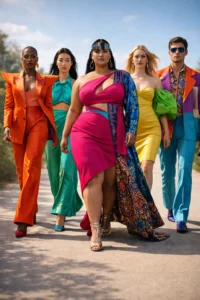
The future of fashion isn’t coming. It’s already here, wearing something unexpected, and it looks better than the forecast suggested.